


Blog
How the UK Compares to Europe on Promotional Products (2026 Data)
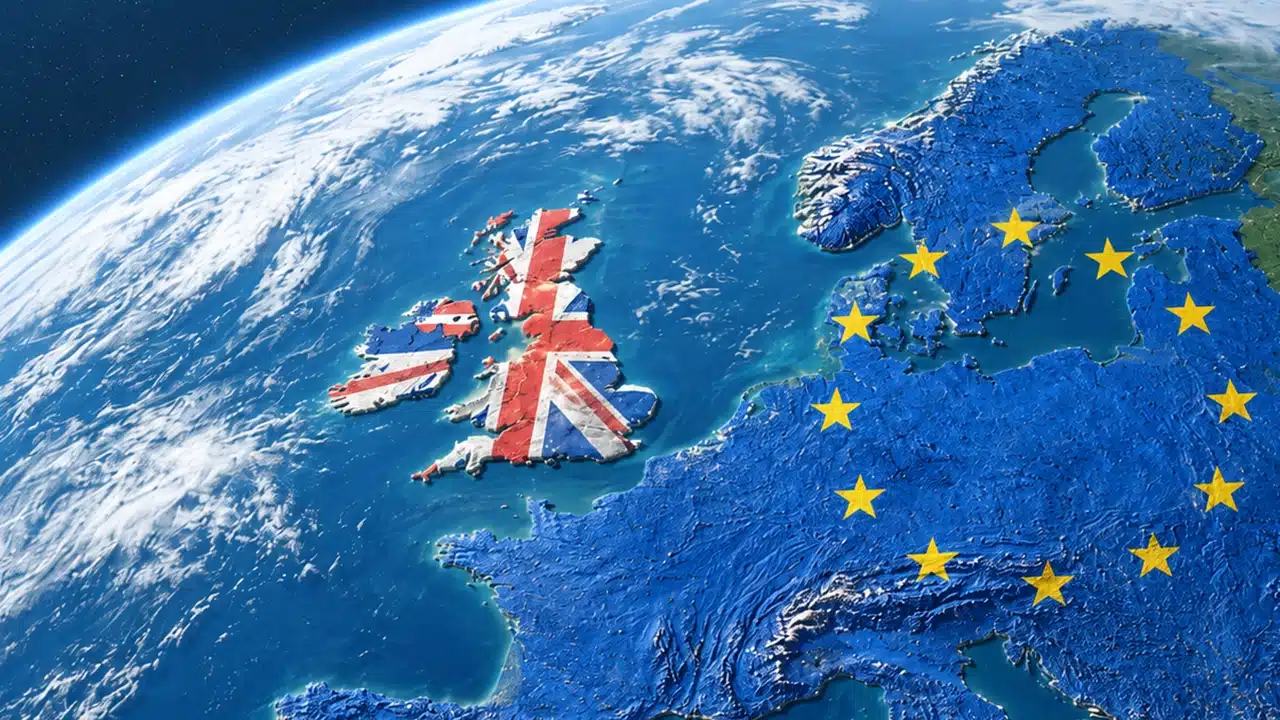
The promotional products conversation in Britain usually stops at the border. We pull the UK figures, nod at how healthy they look, and move on. But the ASI Global Advertising Impressions Study 2026/2027 didn’t survey the UK in isolation; it questioned consumers across two dozen markets, from Mexico to Norway. And once you set the British numbers beside their European neighbours, a more revealing picture emerges. Britain is quietly excellent at the thing that actually matters commercially, and quietly unmoved by the thing everyone assumes it cares about most.
That combination has real consequences for how you brief, budget and buy branded merchandise. It suggests the messages that win consumers in Milan or Lisbon are not always the ones that win them in Manchester or Leeds. So before you borrow a European playbook wholesale, it’s worth understanding exactly where the UK sits, where it leads, and where it politely declines to follow.
Here are the three UK headline figures, and they are strong by any standard.
97%
of UK consumers would have a more favourable impression of an advertiser after receiving a promotional item
93%
would be more likely to do business with an advertiser who gave them a promotional item
78%
view promotional products more positively than other forms of advertising
Britain leads Europe on the numbers that close deals
Start with the two metrics a business owner should care about most, because they map directly onto reputation and revenue: whether a promotional item improves how people see you, and whether it makes them more inclined to buy from you.
On both, the UK sits at the front of the pack. That 97% favourable impression puts Britain shoulder to shoulder with the study’s highest performers; only a handful of markets, Italy and Mexico among them, edge ahead at 99%. The 93% who say a gift makes them more likely to do business is comfortably above the international average of 92%, and within touching distance of Ireland’s 95%. In other words, the British consumer is every bit as persuadable as the European consumer once a well-chosen object is actually in their hands. The scepticism people assume defines the UK market simply doesn’t show up at the point of impact.
If you only ever looked at these two figures, you’d conclude the UK behaves much like everywhere else, just a shade more warmly. It’s the next set of numbers that tells the more useful story.
But UK consumers are harder to win over on the backstory
The study also measured how much four “value story” attributes lift a consumer’s opinion of an advertiser: whether the product is sustainable, socially responsible, made in their own country, or personalised. These are the qualities marketers increasingly lean on to justify a campaign. And this is where Britain quietly parts company with the continent.
| Consumer response | UK | International average |
|---|---|---|
| More favourable impression after receiving an item | 97% | 95% |
| More likely to do business with the advertiser | 93% | 92% |
| View promo more positively than other advertising | 78% | 79% |
| More favourable when the item is made in their country | 86% | 90% |
| More favourable when the item is personalised | 86% | 89% |
| More favourable when the item is socially responsible | 85% | 91% |
| More favourable when the item is sustainable | 84% | 90% |
Look down that lower block. On every one of the four story attributes, the UK lands beneath the international average, and on sustainability it sits among the least swayed markets in the entire survey. British consumers gave sustainable items an 84% favourability lift; in Italy the same attribute scored 96%, in Finland 93%. The gap on local manufacturing is just as telling. “Made in the UK” moved 86% of British respondents, a genuinely high number, yet Portugal reached 97% and Spain 96% on the equivalent question. Social responsibility and personalisation follow the same shape: still strong in absolute terms, but consistently a few points shy of the European mood.
None of this means the story attributes don’t work in Britain. An 84% response is not indifference. It means they work as a supporting argument here rather than the headline act, and that distinction should change how you weight them in a brief.
The pattern: a pragmatism-first market
Put the two halves together and a clear personality appears. The UK converts strongly on outcomes but responds coolly to virtue, and the reason sits in a separate figure from the same report: usefulness. When British consumers were asked why they keep a promotional item, 76% said simply because it is useful to have, far ahead of any other reason. Utility, not ideology, is what earns an object a place in a British drawer, bag or coat cupboard.
In Britain, the question a promotional product has to answer isn’t “does this make the brand look good?” It’s “will I actually use this?” Everything else is a tie-breaker.
All In One Merchandise
That is a subtly different market to the one many pan-European campaigns are designed for. A southern European audience may be genuinely lifted by “handmade, local, ethical, sustainable” as the lead message. A British audience nods at all of that, then decides based on whether the thing is warm, practical, well-made or solves a real problem. If you’d like the fuller picture on why usefulness dominates British buying behaviour, our companion piece on whether promotional products still work in the UK digs into it.
Fleece: the one product Britain crowns that nobody else does
The clearest single expression of British pragmatism is sitting right at the top of the UK product wish-list. Asked which promotional products they’d be most excited to receive, UK consumers put fleece first, ahead of T-shirts, food gifts, bags and mobile power banks.
What makes that remarkable is not that fleece is popular, but that Britain is the only country in the whole study to rank it number one. Fleece performs well right across Northern and Western Europe: it lands second in Ireland and Norway, third in Denmark, Finland, Greece and Sweden. Yet only in the UK does it take the top spot outright. Blame the weather, the working culture, the sheer number of hours a British adult spends slightly too cold, but the message for marketers is concrete. A warm, wearable, genuinely useful garment is close to a national love language here, and it happens to be one of the most visible items you can brand, worn on sites, at exhibitions, on the school run and everywhere in between.
If your audience skews outdoor, trade, hospitality, education or events, a well-made branded fleece or piece of outerwear is arguably the most on-brief thing you can put a logo on in the UK. The caveat is the same as ever: it has to feel like a garment someone would choose to wear, not a giveaway they tolerate.
The tougher-crowd paradox
There’s one more figure worth pausing on, because at first glance it seems to contradict everything above. When consumers were asked whether they view promotional products more positively than other forms of advertising, the UK scored 78%, a whisker below the 79% international average and well behind the enthusiasm of Portugal at 93%, Greece at 88% or Italy at 87%. So Britain is warmer than only a few markets, the Netherlands trailing at 67%, on the question of principle.
Hold that beside the 97% favourable impression and the 93% purchase intent and the paradox resolves itself neatly. British consumers are lukewarm about the idea of advertising in the abstract, and reliably won over by the reality of a good product in the hand. They are, in short, a “show me, don’t tell me” audience. That is not a warning against promotional merchandise; it’s an instruction about how to use it. Rhetoric lands softly here. Objects land hard.
What this means for UK marketers
The European comparison isn’t trivia. It points to four practical adjustments if you’re planning branded merchandise for a British audience.
- Lead with usefulness, not virtue. Choose the product for how genuinely useful it is first, then let the sustainability or provenance story reinforce the choice. In Britain that order matters; reverse it and you’re leading with your weakest argument.
- Treat eco and “made in the UK” as tie-breakers, and back them with proof. They still lift favourability by more than 80%, so they earn their place, but as the deciding nudge between two good options rather than the reason to buy. And only claim them when they’re true, because a hollow green claim does more harm than none at all. Our eco range is a sensible place to start when the credentials need to be real.
- Bias towards practical, wearable, everyday products. The UK top five, fleece, T-shirts, food gifts, bags and power banks, reads like a list of things people already use. Novelty for its own sake is a harder sell here than almost anywhere in the study.
- Don’t import a continental brief unedited. A message tuned for a market where ethics and craft do the heavy lifting will underperform against a British audience that quietly wants to know what the thing is for.
So how does the UK really compare?
Better than its reputation, and differently than its neighbours. Britain is one of the strongest markets in Europe for turning a promotional product into goodwill and, ultimately, business, matching the leaders on favourability and sitting well above average on purchase intent. Where it diverges is in temperament. UK consumers are less moved by the ethical and emotional backstory than most of the continent, and more moved by plain, practical usefulness than almost anyone.
For a UK business, that’s an unusually clean brief. Pick something people will genuinely use, make it well, brand it tastefully, and let any sustainability or provenance credentials quietly strengthen the case rather than carry it. Do that, and the ASI numbers suggest a British audience will reward you as generously as any in Europe.
Planning branded merchandise for a UK audience?
At All In One Merchandise, we help UK businesses choose branded products that people actually want to keep, from embroidered fleece and printed T-shirts to bags, food gifts, drinkware and tech. If you’d like merchandise matched to a British audience rather than a borrowed European brief, we can help you get the choice right.
Source: Research provided by the Advertising Specialty Institute, ©2026, All Rights Reserved. Report: ASI Global Advertising Impressions Study 2026/2027 (International edition). This article uses UK-specific findings alongside published international and country comparisons.